






Monkey Orchid: The Weird Real Flower That Looks Like a Monkey
 Story by:
Incredible Discoveries
Story by:
Incredible Discoveries
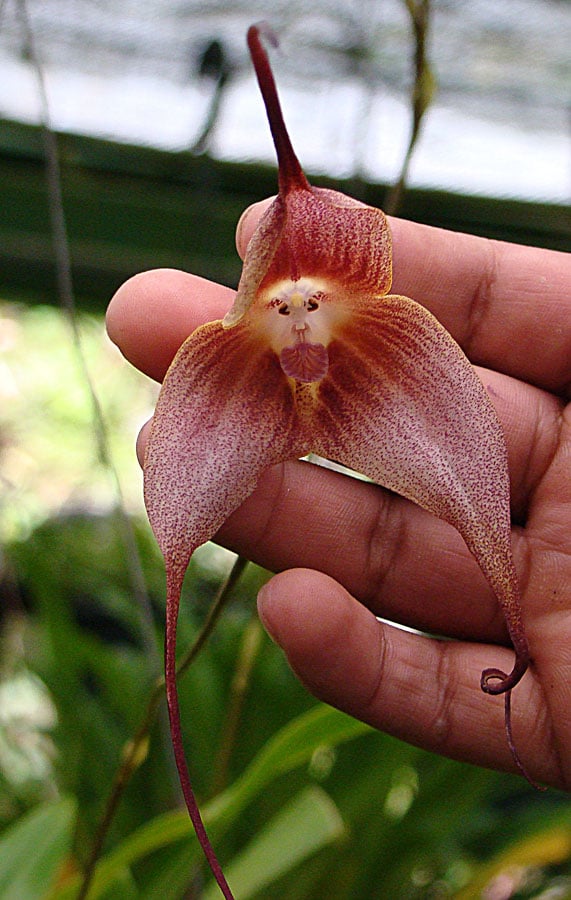
The monkey orchid is one of those flowers that makes people stop and look twice. At a glance, its bloom can look uncannily like a tiny primate staring back at you.
The resemblance can be so convincing that photographs are often dismissed as Photoshop edits or AI-generated images. Some blooms produce a remarkably clear little face, while others require more imagination, which only adds to the uncertainty surrounding photos shared online.
Are Monkey Orchids Real?
Yes, monkey orchids are real. The famous monkey face orchid, Dracula simia, is native to southeastern Ecuador, though some online images may be edited or misleading. Its specialized habitat also highlights the importance of protecting native biodiversity.
That mix of genuine botanical strangeness and online skepticism is a big part of the monkey orchid’s appeal. Understanding the flower starts with identifying exactly which orchid people mean when they use the name.
What Is a Monkey Orchid?
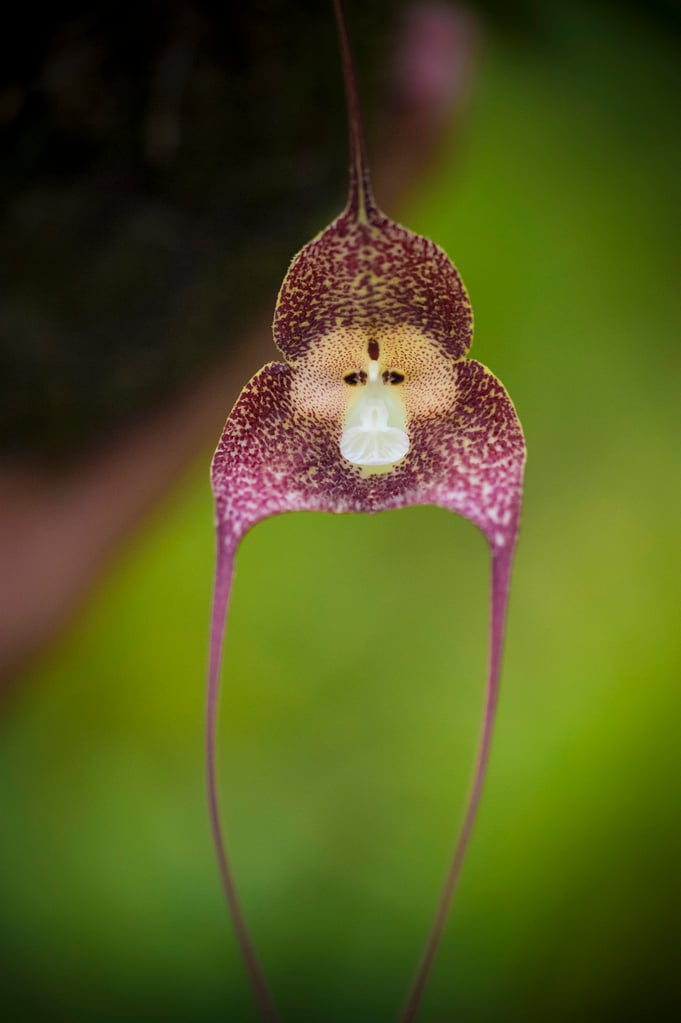
The name “monkey orchid” is used for more than one species, but the flower most people mean is Dracula simia. It is also commonly called the monkey face orchid or monkey-faced orchid.
The scientific name is appropriately descriptive: Dracula is the genus to which it belongs, while simia comes from the Latin word for monkey. Makes sense.
Why Does the Monkey Orchid Look Like a Monkey?
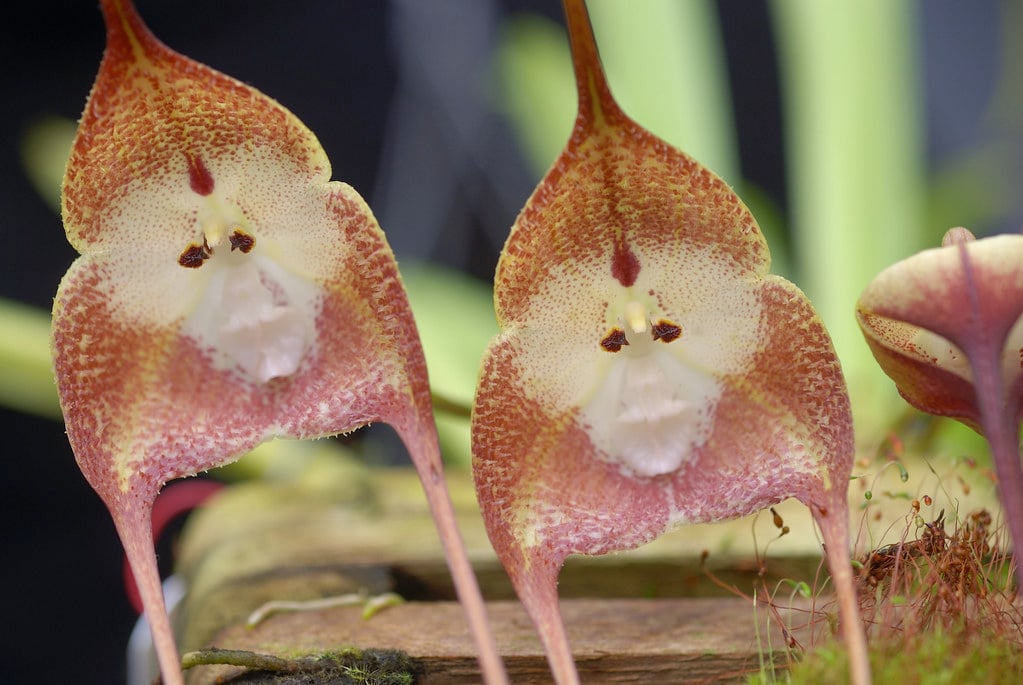
The monkey orchid looks like a monkey because the natural shapes, colors, and markings in the center of its flower resemble facial features. Darker areas look like eyes, the middle resembles a nose, and the lower portion can appear to form a mouth. Then your brain fills in the rest.
The effect is an example of face pareidolia, the tendency to perceive faces in shapes or objects that are not actually faces. In Dracula simia, the flower gives the brain unusually strong cues: the three sepals create the bloom’s outer shape and extend into long, narrow tails, while the smaller petals and central column suggest facial features. The labellum, or lip, can read as a mouth.
The flower’s coloration helps too. Different Dracula orchids may feature brown, reddish, cream, purple, or spotted shades. The contrast between the darker and lighter areas makes the little face stand out.
The monkey-like face is probably a human interpretation rather than an adaptation that evolved to resemble a primate. There is no clear evidence that looking like a monkey provides the flower with any biological advantage.
Researchers have documented another form of mimicry within the broader Dracula genus involving fungi. Some species produce shapes and scents resembling mushrooms or gilled fungi, which can attract small flies that help pollinate the flowers. That research shows that mimicry can serve a biological function within the genus, but it does not mean Dracula simia evolved to resemble a primate.
Are People Drawn to Unusual Flowers?
The monkey orchid attracts attention because its bloom looks almost too strange to be real, but appearance is only part of the appeal. Flowers can also influence the atmosphere of a room and affect how people feel, as explained in how flowers can positively impact mental health.
Two Monkey Orchid Species People Confuse
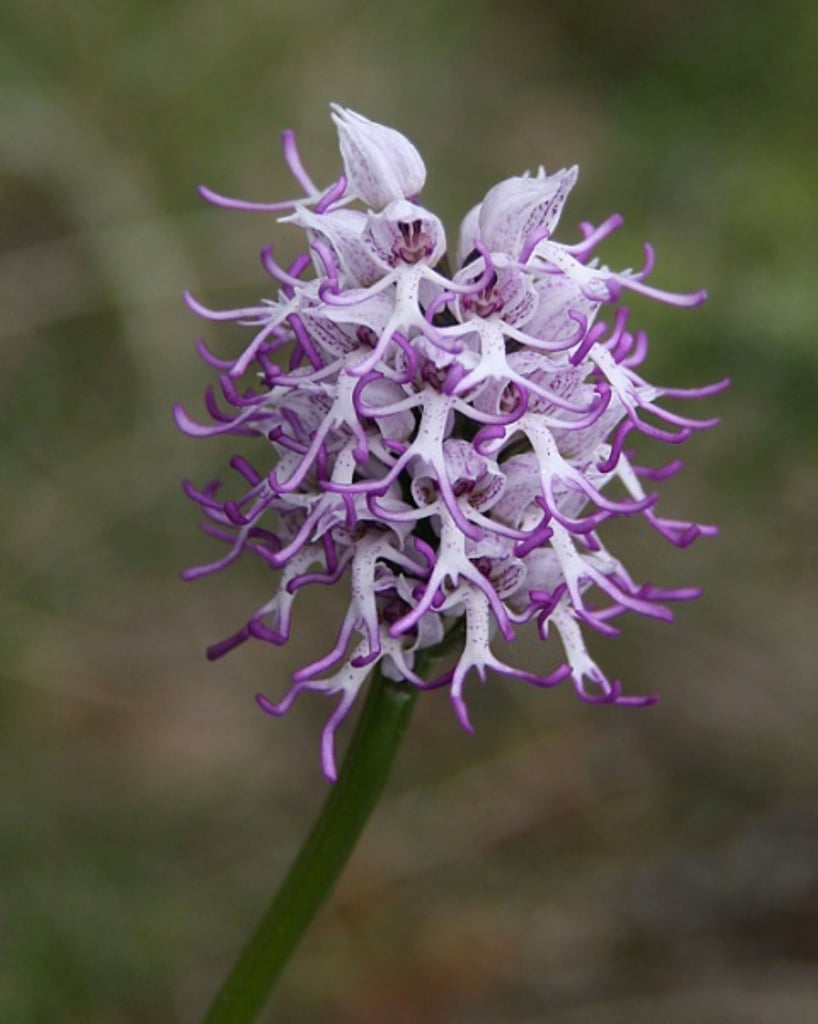
The name “monkey orchid” can refer to several orchids, but two species appear especially often in searches: Dracula simia, whose flower resembles a monkey’s face, and Orchis simia, whose flowers resemble tiny monkey-shaped figures.
|
Feature |
Dracula simia |
Orchis simia |
|---|---|---|
|
Common description |
Monkey face orchid; also called monkey orchid |
Monkey orchid |
|
What the flower resembles |
A monkey-like face with long sepal tails |
A small monkey-like figure with arms, legs, and a tail |
|
Plant group |
Dracula genus |
Orchis genus |
|
Native range |
Southeastern Ecuador |
Europe to Iran and North Africa |
|
How and where it grows |
Grows on trees in cool, wet tropical forests |
Grows in the ground across parts of Europe, North Africa, and western Asia |
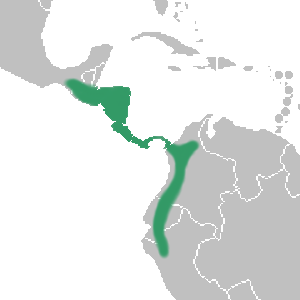
Image Credit: Wikimedia Commons/Dalton Holland Baptista
Where Does the Monkey Face Orchid Grow?
The monkey face orchid, Dracula simia, is native to the wet tropical forests of southeastern Ecuador. Other members of the broader Dracula genus grow elsewhere in Central and South America, but their distribution should not be confused with the accepted native range of Dracula simia itself.
Those forests provide the cool, humid, shaded conditions the orchid depends on. Recreating that environment indoors can be difficult, which is one reason Dracula simia is more likely to be found in specialist orchid collections and controlled growing setups than on an ordinary windowsill.
Can You Buy Monkey Face Orchids?
You can buy a monkey face orchid, but genuine Dracula simia plants are usually sold by specialist orchid growers rather than ordinary garden centers. Before ordering one, confirm that the listing includes the scientific name Dracula simia instead of relying on a vague description such as “rare monkey orchid.”
Look for an established, nursery-propagated plant. A credible listing should show realistic photographs and explain the plant’s size and growing requirements. Be wary of heavily edited or AI-generated images, especially pictures showing monkey faces that look far more detailed than an actual flower.
Monkey face orchid seed listings deserve even more skepticism. Orchid seeds are tiny and lack the nutrient reserves found in ordinary garden seeds. In nature, they generally depend on compatible fungi to germinate, while commercial growers typically use specialized sterile growing methods and nutrient-rich laboratory media.
In other words, a packet of monkey face orchid seeds cannot simply be scattered into potting soil and placed on a windowsill. Even legitimate seeds require specialist equipment, considerable patience, and the right growing conditions.
Buying an established plant skips the difficult germination process, but it does not make Dracula simia easy to grow. Keeping the plant healthy presents an entirely different challenge.
How to Care for a Monkey Face Orchid
Monkey orchid care depends on keeping several conditions in balance rather than maximizing any one of them. Constant moisture and high humidity still need to be paired with drainage and air movement, while excessive heat or direct light can quickly stress the plant.
Is a Monkey Orchid a Good Plant for Beginners?
No. Dracula simia requires carefully controlled humidity, moisture, and airflow, making it better suited to experienced orchid growers. Anyone still developing their green thumb may want to begin with some of the best and hardiest plants for newbie gardeners before attempting this demanding species.
The table below breaks down the main care requirements and the mistakes most likely to cause problems.
|
Care requirement |
What Dracula simia needs |
Common mistake to avoid |
|---|---|---|
|
Light |
Shade or soft, indirect light |
Placing it in direct sunlight |
|
Watering |
Growing material kept continuously moist |
Allowing the roots to dry out |
|
Water quality |
Rainwater, distilled water, or reverse-osmosis water |
Regularly using hard tap water |
|
Humidity |
Consistently high humidity |
Keeping it in dry household air |
|
Airflow |
Gentle, continuous air movement |
Creating a sealed or stagnant environment |
|
Container |
Mesh pot or hanging basket with good drainage |
Using a container that restricts flower spikes |
|
Growing material |
Loose orchid-growing material with good drainage |
Packing the roots into dense, waterlogged material |
|
Best environment |
Greenhouse, orchid cabinet, terrarium, or another controlled setup |
Treating it like an ordinary windowsill orchid |
Many Dracula orchids produce flower spikes that grow downward rather than upward. Growers therefore commonly use mesh pots or hanging baskets, which give the spikes room to emerge instead of allowing the container to block them.
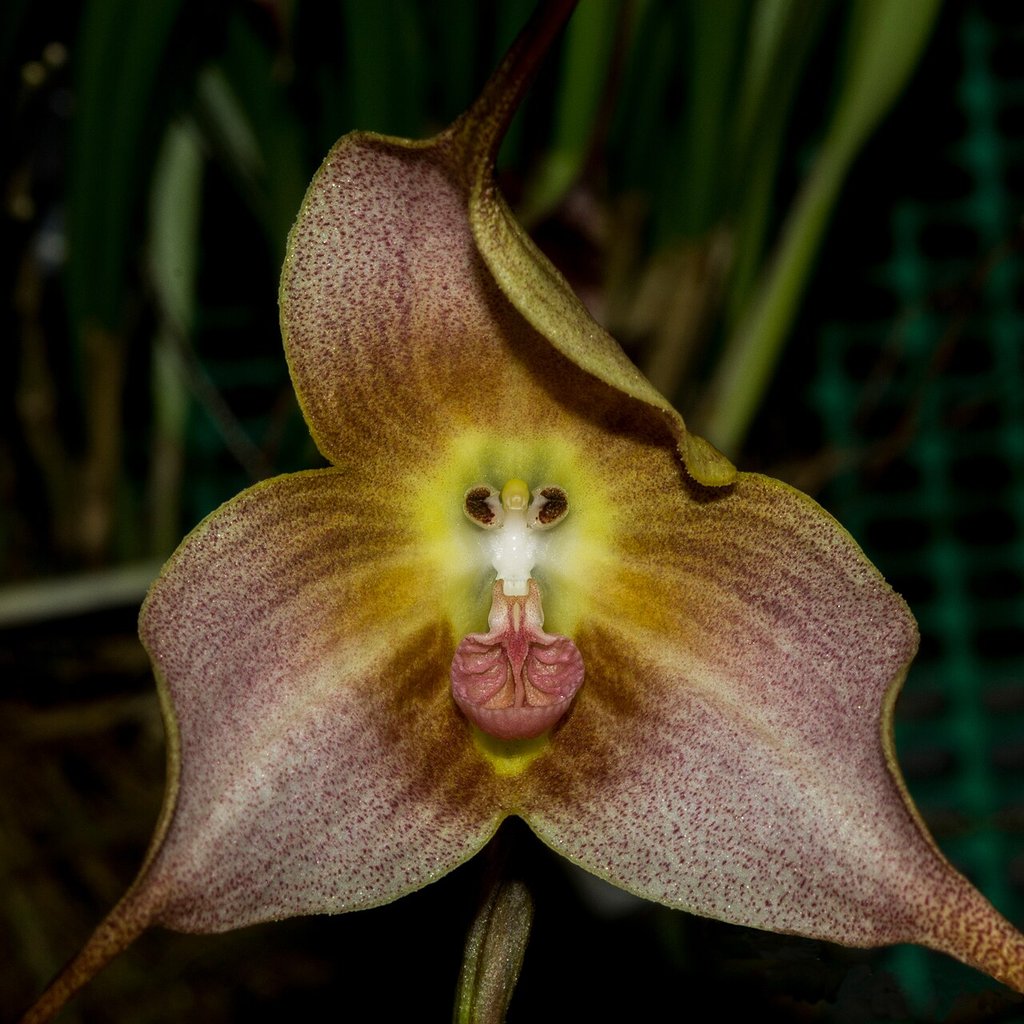
Image Credit: Wikimedia Commons/Kilitz Photography
A Flower Worth Looking At Twice
What makes Dracula simia so compelling is that the genuine flower hardly needs embellishment. Some blooms produce a stronger facial impression than others, but its strange shapes, markings, and colors are striking enough on their own.
Nature occasionally produces something that looks like it was designed as a joke, and this is one of its better efforts. The monkey orchid is weird in the best possible way.
Feature Image Credit: Wikimedia Commons / Dick Culbert


Comments 0
No Readers' Pick yet.