







What’s the Weirdest Thing a Forklift Has Ever Lifted?
 Story by:
Incredible things automotives
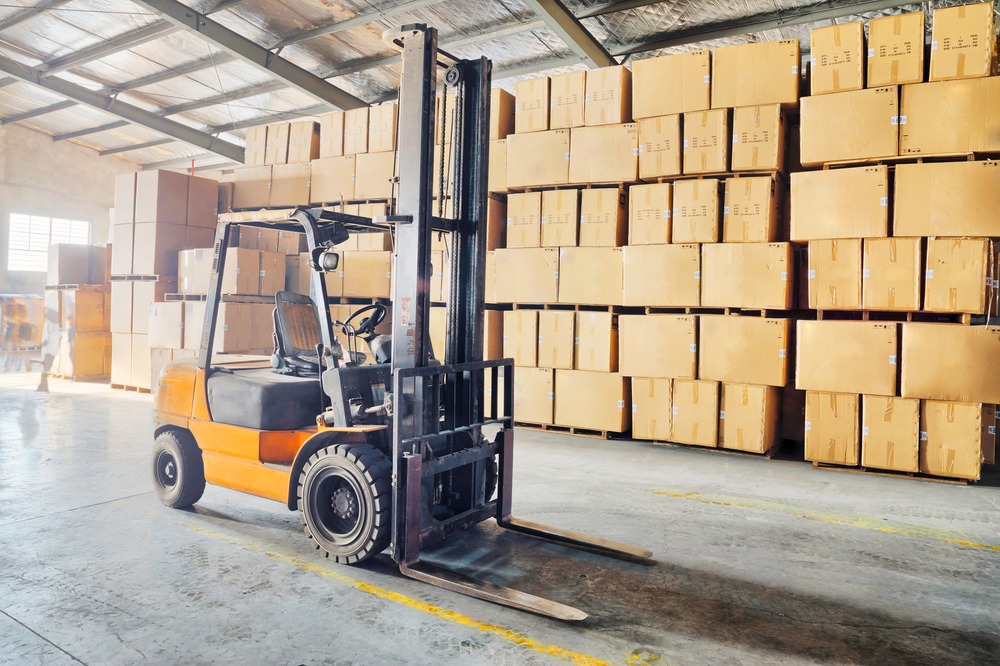
What are some weird things forklifts have lifted? Just a little research, and some answers pop up: a whale carcass rolled onto the forks for necropsy; a vintage locomotive shoveled inch by inch into a museum exhibit; a 40-foot pizza that was placed at the end of a street to avoid crane access; a section of steel bridge set in place because no crane could get close enough to the site. Almost anything that can be securely balanced on the tines of a forklift can be lifted by a forklift, and that has resulted in some very strange entries in the record books. These feats demonstrate the versatility of this mundane piece of industrial machinery becoming a part of incredible human achievements, whether it’s an unusual oversized object or an astounding lifting challenge.
The trivia is fun. The physics is improved. This machine can lift a lot more than it weighs without pitching forward, and once you learn how to do the arithmetic, the record pitches don’t seem like magic. The same physics applies to why sometimes, strange lifts go awry so rapidly. Weight is just one part of it – attachments, load center, operator decision, balance, all play a part in moving something strange safely or sending it to the floor. Those are the fundamentals a solid forklift certification program drills in from day one.
How Heavy Can a Forklift Actually Lift?
The ceiling sits higher than most people would guess. The current production champ is a brute built for ports and steel mills: the Kalmar DCG600-850, a super-heavy counterbalance truck with a capacity of 187,000 lbs. See a semi-trailer with a load lifted off the ground and pulled over a yard on four tires and a mast.
A warehouse forklift exists in the world of a few thousand pounds, at a common load center. There’s not a single thing about getting into a Kalmar super-heavy that entails fitting a larger engine. The difference is a much higher counterweight behind the back axle, and a chassis that is designed to ensure that the entire system remains balanced once the forks are loaded up.
What Physics Keeps the Whole Thing From Tipping?
A forklift is a seesaw with wheels. The front axle is the pivot; the weight above the forks pushes down on one side, and the body of the truck plus its counterweight pushes down on the other. As long as the two moments stay in balance, the rear wheels stay planted, and the machine stays put.
The four principles that govern this are the fulcrum, the load moment, the center of mass gravity, and the stability triangle.
The first three are the maths. The fourth one is the shape, or geometry. On a sit-down counterbalance truck, the stability triangle is the area between the tyres and the pivot point of the rear axle, and the truck/load center of gravity must be within the stable triangle. If you lift the load too high, turn it around too rapidly, or load forward, the truck tips over.
That is why a record-breaking lift is NOT a horsepower question. Weight may be more important than load center. Weight isn’t the final factor. The behavior of a heavy coil fastened near the backrest of the forklift is quite different from an equally heavy crate hung from the centre of mass beyond the fork heels. This disparity accentuates the intriguing physics of balancing, levers, and loads in industrial machinery.
What Are the Weirdest Loads on Record?
Operators share their anecdotes on the weirdest things they’ve ever moved, and it goes crazy quickly. Some that repeatedly occur:
- Whole animals. Forced large animals, whales already dead for necropsy, and in the past, even a live rhino were transported using forklifts at zoos, aquariums, and research centers. The load is impossible to predict, the centre of gravity varies, and the operator must drive it as if it were a load of water, not steel.
- Giant food. Nothing so controlled and slow-moving as a forklift to get world-record pizzas, cakes, and cheese wheels onto their special pallets.
- Aircraft parts. Heavy forklifts are used to transport engine nacelles, wing sections, and even small fuselages around hangars. The cost of parts is high enough that the loss of a part puts an end to the career, so the mind is focused.
- Other forklifts. Yes, really. Small trucks are routinely loaded onto big trucks on flatbeds.
- Pieces of buildings. On-site where a crane cannot reach, rough-terrain forklifts are used to install prefab wall panels, HVAC units, and modular rooms.
What Lets an Operator Lift Something That Heavy Safely?
Capacity listed on the data plate is a minimum and does not guarantee safety. The rated number is based on a typical load center and a “behaving” load. Shift the balance of the center of mass to the outside, lift the mast, attach something to it, or place it on an incline, and the actual capacity will come down, often considerably. That’s why it’s operators who have the record-setting lifts who know what the machine is doing beneath them. This is work for which training is a must. Employers who are serious about the odd load will go above and beyond the minimum before they allow the new employee to be near anything unusual.
Here’s what weird movers do. They walk the load before making any contact with it. They re-read the data plate when an attachment is added since the effective load center and the derated capacity are different for each attachment. Operators will often pick up a load just a few inches and wait and inspect the back wheels before heading off. If the rear end does feel light, they drop it right off. The mundane reminder is a good warning of the power of small balance changes for heavy industrial machinery.


Comments 0
No Readers' Pick yet.