







The Biggest Diamond in the World: Size, Value, History, and Facts
 Story by:
Incredible Discoveries
Story by:
Incredible Discoveries
Some diamonds are known for their price or beauty. A few become famous for something bigger than either: they become part of history. That’s exactly what happened with what is widely considered to be the biggest diamond in the world, the Cullinan Diamond.
This wasn’t just another rare stone. It was the largest rough diamond ever found, at 3,106 carats, a discovery so extraordinary that it still shapes how people talk about famous gems today. Even now, when people ask what the biggest diamond in the world is, they are usually chasing the story of one stone that changed diamond history forever.
However, “biggest” doesn’t always mean the same thing. It can refer to the largest gem-quality diamond in rough form, the biggest polished stone, or the largest diamond ever set in a ring. Those are different categories, but, in most cases, the Cullinan holds the remarkable status that people are after.
Quick Facts: Ways to Interpret “Biggest Diamond”
| Record / Title | Name | Size / Weight | Why it Matters | Important Note |
|---|---|---|---|---|
| Biggest gem-quality rough diamond ever found | Cullinan Diamond | 3,106 carats | Main answer for “biggest diamond in the world” when quality is considered | Found at the Premier Mine in South Africa; later cut into major royal stones |
| Biggest rough diamond by weight | Sergio Diamond | 3,167 carats | Heavier than Cullinan in rough weight | Black carbonado diamond; not considered gem-quality or suitable for jewelry |
| Biggest cut-and-polished gem-quality diamond | Golden Jubilee Diamond | 545.67 carats | Largest diamond to be cut for jewelry | Larger than Cullinan I after cutting and polishing |
| Biggest diamond cut from the largest diamond ever found | Cullinan I / Great Star of Africa | About 530 carats | Most famous Cullinan stone and part of royal history | Set in the Sovereign’s Sceptre; slightly smaller than the Golden Jubilee |
| Most diamonds in a ring | SWA Diamond Rings | 50,907 diamonds | Record is based on most diamonds in one ring | Not one single giant diamond |
What Is the Biggest Diamond in the World?
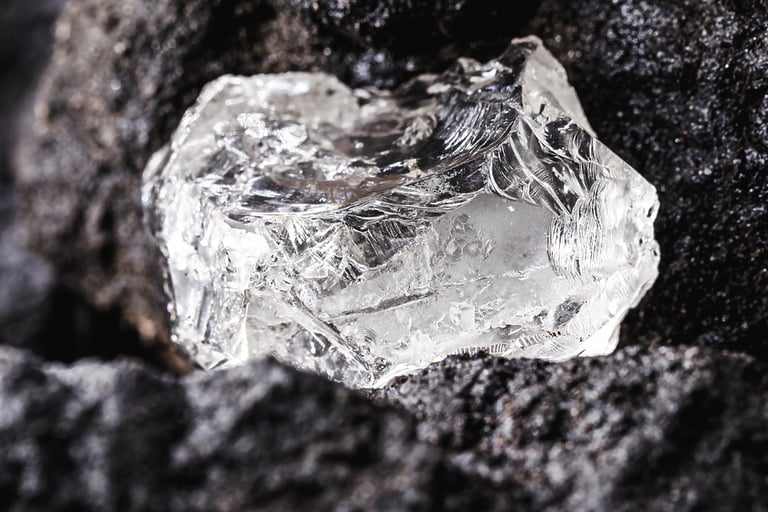
The biggest gem-quality rough diamond in the world is the Cullinan Diamond. It was first discovered by Frederick Wells, who was working at the Premier Mine in South Africa at the time. The stone was later named after Sir Thomas Cullinan, the mine’s owner. It was a humble origin for something now so closely tied to crowns, scepters, brooches, and the royal family.
The rough diamond weighed 3,106 carats, or approximately 621.2 grams. Its exceptional size, blue-white color, clarity, and royal history made it one of the most celebrated diamonds ever found.
The Sergio carbonado is often described as the largest known natural diamond specimen by weight. It is traditionally recorded at 3,167 carats, making it 61 carats heavier than the Cullinan. However, carbonado is an opaque, porous, polycrystalline form of diamond rather than the transparent single-crystal material normally used for fine gemstones. Historically, carbonado was valued mainly for industrial applications.
Among gem-quality rough diamonds, the closest modern comparison is the Motswedi Diamond from Botswana. GIA examined the stone in 2025 at 2,488.32 carats, making it the second-largest known gem-quality rough diamond after the Cullinan.
This is the key difference. The Cullinan was not only massive; it was also magnificent. It was large enough to be cut into several extraordinary stones.
From Royal Gift to Famous Cullinan Stones
The diamond was named after Sir Thomas Cullinan, chairman of the mining company. His name became permanently tied to the stone once the diamond entered royal history.
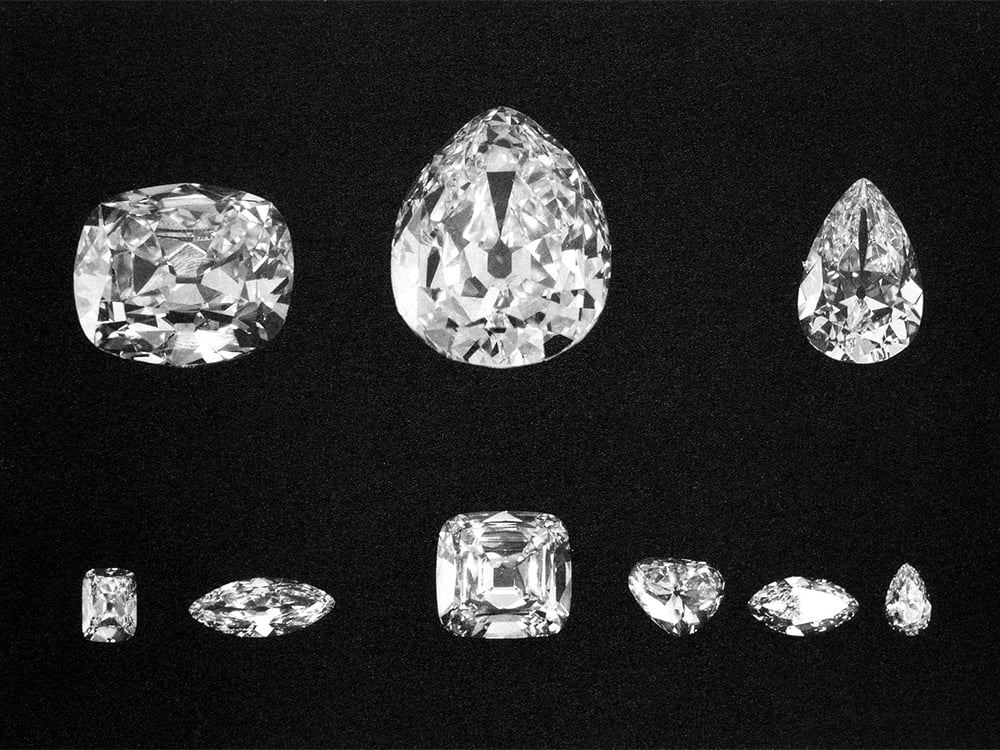
But the original Cullinan no longer exists as one stone. Asschers of Amsterdam cut and polished it into nine numbered diamonds, 97 small brilliants, and some unpolished fragments. The two best-known stones are Cullinan I, also called the Great Star of Africa, and Cullinan II, known as the Second Star of Africa.
Price of the Biggest Diamond in the World
The Cullinan Diamond is almost impossible to price in any standardized way. It would be like putting a price tag on the Declaration of Independence. A diamond can be valued by carat weight, clarity, cut, and rarity, but the sheer scale of the Cullinan is far beyond that kind of calculation. This was not just a large stone plucked from the ground. Beyond the literal value of the material lies the historical significance of the nine stones.
Its value comes from more than its sheer size. It comes from Joseph Asscher’s daring cut, the large stones and smaller pieces that came from the rough diamond, and the royal history that followed. Parts of the Cullinan became jewels connected to Queen Mary, Queen Elizabeth II, royal coronations, state ceremonies, and the British Crown Jewels. That kind of provenance does not behave like a price tag; instead, it becomes history.
What Determines a Diamond’s Value?
A diamond’s worth usually comes down to a combination of factors:
- carat weight
- color
- clarity
- cut quality
- rarity
- historical significance
- provenance
Note that provenance (the path of the diamond from mine to jewelry) matters a lot here. A diamond with a story behind it often carries more significance than one that is simply large and expensive. The Cullinan isn’t just famous because it was big. It has a legacy.
What Really Drives Diamond Value
Carat weight may attract the most attention, but a diamond’s overall quality often has a greater effect on its beauty, durability, and long-term worth. For a closer look at that balance, read Diamond Quality Makes a Difference in Proposal Rings’ Value.
Fun Facts About the Biggest Diamond in the World
One reason this topic gets confusing is that “biggest diamond” can mean a number of different things. The Cullinan is the largest gem-quality rough diamond ever discovered, while the Golden Jubilee holds the record for the largest cut and polished gem-quality diamond.
Many people think that the largest diamond in the world possesses every size-related record. But that’s not the case. The confusion usually comes from treating every “biggest” diamond as the same kind of record. Some are measured in the rough state (uncut). Other diamonds hold records only after they’ve been cut and polished. Furthermore, many records only consider diamonds that meet a specific quality standard.
History of the Biggest Diamond in the World
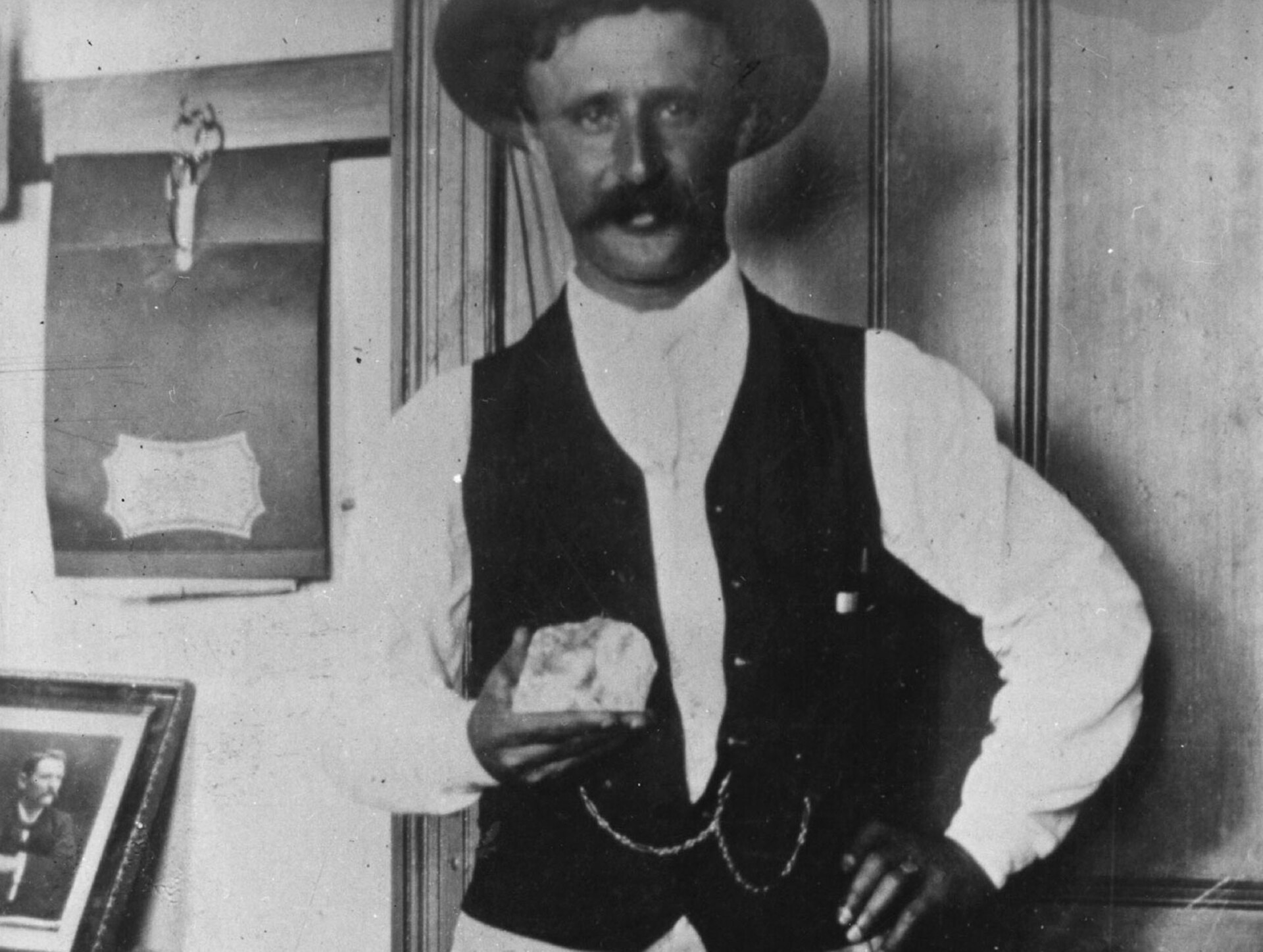
The history of the Cullinan Diamond is one of the main reasons for its fame today. Frederick Wells discovered it at the Premier Mine near Pretoria, South Africa, on January 26, 1905, and the stone was named after mine owner Thomas Cullinan. Overnight, it became a sensational story.
Then the political and royal side of the story took over. The Transvaal Colony government bought the stone and presented it to King Edward VII as a formal gift. That turned the Cullinan from a geological wonder into something else entirely: a royal symbol. It became part of the larger royal story, which is one reason it still receives widespread attention today.
How the Cullinan Was Cut and Turned Into Crown Jewels
The Cullinan didn’t go from mine to crown by luck. After it reached Amsterdam, the Asscher firm took over the cutting. This was where size stopped being glamorous and became dangerous. One wrong cut could have turned the greatest diamond ever found into a ruined stone.
The first strike became part of the Cullinan legend. The blade broke, but the diamond didn’t. That alone tells you what the cutters were dealing with.
After careful cutting, the rough diamond was divided into nine major stones and several smaller ones. The most famous were Cullinan I, the Great Star of Africa, and Cullinan II, the Second Star of Africa. Cullinan I later went into the Sovereign’s Sceptre. Cullinan II was set into the Imperial State Crown.
Largest Cut-and-Polished Gem-Quality Diamond in the World
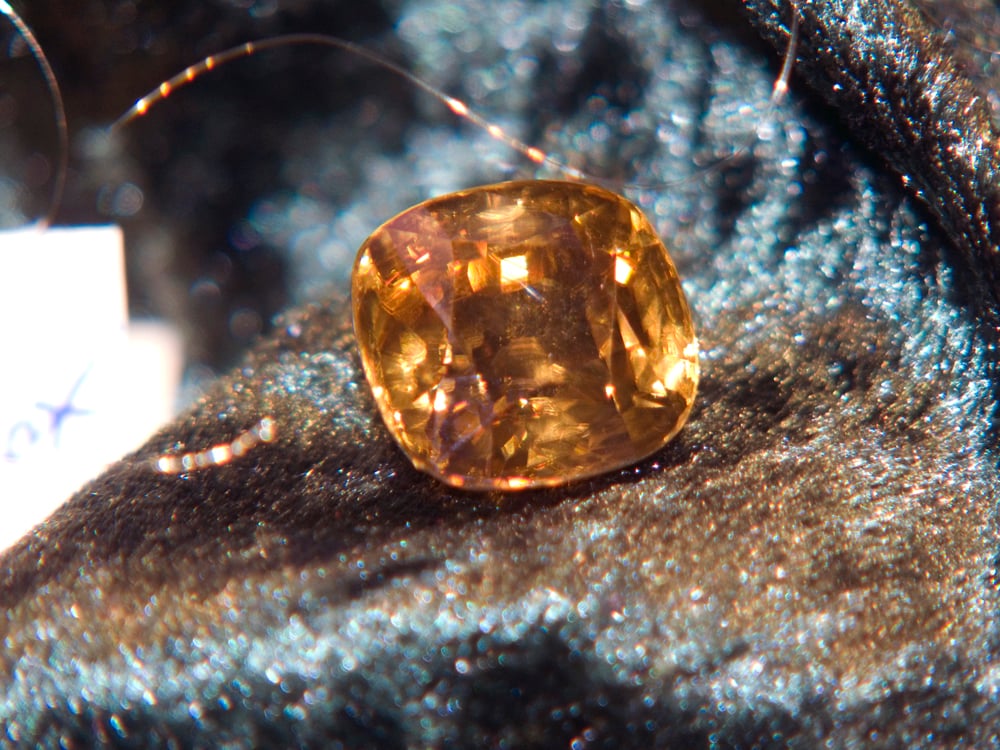
The Golden Jubilee Diamond holds the record as the largest cut-and-polished gem-quality diamond, weighing 545.67 carats. Cullinan I weighs 530.2 carats and is the largest polished stone cut from the original Cullinan rough. It remains especially famous because it is set in the Sovereign’s Sceptre with Cross.
The Golden Jubilee was discovered at South Africa’s Premier Mine in 1985 as a 755.5-carat rough diamond. After an extensive cutting process, it became a 545.67-carat polished fancy yellow-brown diamond, outweighing Cullinan I by more than 15 carats.
For readers interested in why classic white diamonds still dominate luxury jewelry, see our guide to White Diamonds: Brilliance and Beauty of Nature.
Ring With the Most Diamonds in the World
The biggest diamond ring in the world belongs to a different conversation. This is no longer about the largest rough stone ever found or a historic diamond mounted in a scepter or set into the front of the Imperial State Crown. This is about scale turned into spectacle. These rings are usually auction pieces, statement jewels, or high-luxury designs built around stones so large they stop feeling wearable and start feeling theatrical.
The current Guinness World Record for the most diamonds set in one ring belongs to Eutierria, created by H.K. Designs and Hari Krishna Exports. The ring contains 50,907 diamonds, and the record was achieved in Mumbai, India, on March 11, 2023. Its design includes four layers of petals and a butterfly.
One famous example of a large diamond used in an engagement ring is the 40.42-carat marquise-cut Lesotho III. Aristotle Onassis gave the ring to Jacqueline Kennedy Onassis, and the stone was cut from the 601-carat Lesotho rough diamond.
Why Oversized Diamond Rings Capture Attention
The world’s fascination with oversized diamonds did not begin with celebrity proposals. Royal gems such as the Koh-i-Noor and the Cullinan stones helped establish large diamonds as symbols of wealth, authority, and ceremony long before they became associated with celebrity engagement rings.
Why the Biggest Diamond in the World Is More Than Its Size
The Cullinan first attracted attention because of its extraordinary size, but its legacy rests on more than weight. In its rough state, it measured approximately 10.1 × 6.35 × 5.9 centimeters. Even if a larger gem-quality rough diamond is discovered in the future, the Cullinan’s documented history and place in the Crown Jewels would remain exceptional.
The Cullinan became famous because it was huge, but it endures because of its legacy. When it was first found, the stone was said to be larger than a man’s fist. That image alone sticks with people. However, even if a larger diamond was found today, the Cullinan would still hold more value because of its lengthy history and connections to the royal family.
A big diamond ring does not have to change gem history the way the Excelsior Diamond did or carry the royal weight of Cullinan IV or Cullinan VI. It only has to command attention. At that size, the ring isn’t just jewelry anymore. It becomes a display of taste, money, and status.
It was discovered in South Africa during a period of political tension and imperial power. It was presented to a king. It was cut in Amsterdam by master craftsmen who had to plan every move carefully. It was transformed into stones that ended up in crowns, scepters, and royal jewels. It became part of the visual language of the monarchy.
Why the Cullinan Diamond Still Holds the Crown
The biggest diamond in the world remains the Cullinan Diamond, but the story is more complicated than a one-line answer can capture.
In its rough form, the Cullinan remains unmatched among gem-quality diamonds. Other stones hold different records in the world of cut diamonds, but none of those really alter the heart of this story. The Cullinan still stands apart not only because it was large, but because it was, simply, an extraordinary gem. It came with history, drama, craftsmanship, and a legacy that extended far beyond the mine where it was discovered.
That’s why the Cullinan still matters. People aren’t only searching for the name of the biggest diamond in the world. They are searching for the story behind it.


Comments 0
No Readers' Pick yet.