








The Hidden Giants of Industry: How Heat Exchangers Quietly Power Almost Everything You Use
 Story by:
Marc Ikbal
Story by:
Marc Ikbal
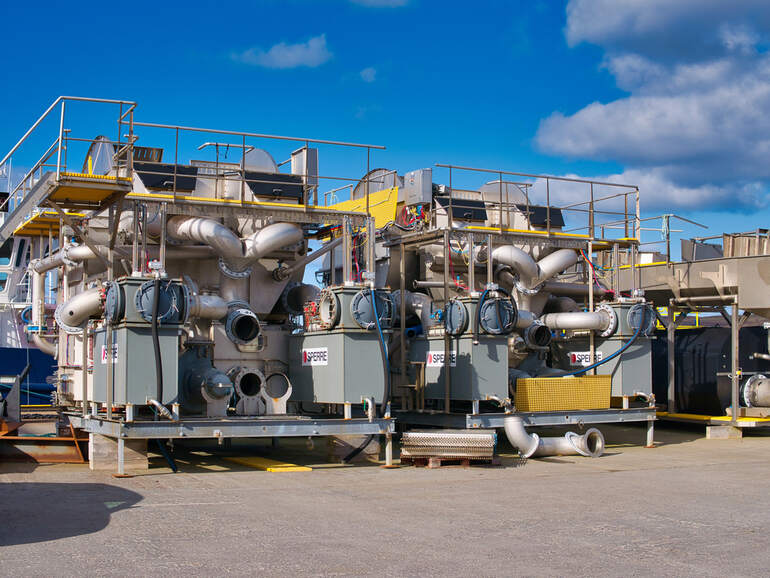
Headlines are not sought after, records are not broken, nor are they going viral, but they are among the most important machines in the modern world: heat exchangers. Even if it’s in massive oil refineries, skyscrapers, industrial food manufacturing, or massive data center operations, these technologies move tremendous amounts of heat every second, and are virtually invisible to the public. Let’s now take the curtain down. What are these machines? Why do whole industries go on a standstill without them, and what makes a few of them truly amazing engineering achievements?
What a Heat Exchanger Actually Does
Eliminate all the jargon,n and a heat exchanger’s sole purpose is to transfer heat from one fluid to another without mixing the fluids. The stream on one side is hot; the stream on the other side is cooler; there is a wall of metal between the two streams; and physics takes care of the rest. It may seem like an unexciting concept, but really efficient methods for heat transfer are crucial to modern life. Consider a car’s radiator. Coolant takes heat out of the engine and releases it to the air flowing through the grill. That’s a heat exchanger; now scale that idea up by a few thousand times, and you’ve got the giants used in refineries, power plants, and chemical facilities.
Where They Hide In Plain Sight
As soon as you begin searching, you’ll find heat exchangers everywhere. They are installed in buildings, plague hot spots within factories, and fastened to ships. Just a few to keep in mind:
- Your home HVAC: Your air conditioner uses a coil design to transfer energy to the air and/or the refrigerant, and your furnace uses a furnace to heat exchanger type to transfer energy to the combustion gases and/or air.
- Power generation: Massive condensers, essentially a large shell and tube exchanger, are employed in steam plants to change spent steam back into water for reuse in the plant.
- Food and beverage: The accurate heating and cooling of milk, beer, and even chocolate are only a few examples of the many applications for which plate exchangers work wonderfully.
- Oil and gas: To preheat crude, cool finished products, and collect waste heat that is being “wasted” as steam, refineries rely on exchangers.
- Data centers: With increasingly hot and dense servers, liquid cooling loops employ small exchangers to transfer the heat to chilled water loops, preventing the silicon from cooking.
The Main Types of Exchangers
Engineers do not have one universal design as not one shape is designed to handle all of the fluids, pressures,s and temperatures. A good rundown of the main exchanger types shows just how varied the family tree gets, from compact plate units to towering air-cooled banks.
It is clear that the large categories you are likely to come across frequently:
- Shell-and-tube: The classic. In the middle of a larger shell, there is a bundle of tubes encasing one fluid, within which is another fluid. They are hard, expandable, and clean, which is why refineries love them.
- Plate-and-frame: When the corrugated plates are thin and are stacked tightly, it forms a maze of channels. They are very space-efficient with a huge surface area and are used in the dairy and brewing industries.
- Air-cooled (fin-fan): Large horizontal fan sinks. Bigger horizontal fan sinks with fans below. Widely used in the pipeline stations and refineries where cooling water is limited.
- Double-pipe: The simplest design. Inward pipes are placed inside each other. Simple, affordable to keep up, and a great tool for smaller jobs.
Why Efficiency Is A Bigger Deal Than It Sounds
Industrial process heating chews through a staggering share of the energy used by manufacturers. According to the U.S. Department of Energy, process heating uses a significant amount of energy in the manufacture of goods in the U.S. There is more than a minor adjustment involved in squeezing more performance out of a heat exchanger. It has the potential to save genuine money in operating costs and also to cut emissions.
This is why some of the best engineering occurs in locations that we don’t necessarily consider. The angle of a metal plate, the internal barrier configuration, or the type of special alloy, all can mean the difference between performance and its absence. These seemingly small decisions come together over the years and transform normal equipment into technological wonders that can handle extreme conditions with great efficiency.
The Genuinely Incredible Part
Some of these machines are enormous. Air-cooled units at a single gas plant can stretch the length of a football field, while the chiller pump systems that support large-scale cooling networks help circulate vast volumes of fluid with remarkable efficiency. These days, the quantity of cooling water generated by condensers at the large-scale power stations is sufficient for a small city, and the cryogenic exchangers operating in the liquefied natural gas manufacturing process can function at a colder temperature than the surface of planet Mars. But what about the odd beauty of brazed aluminum cores with hundreds of paper-thin fins riveted together to process multiple streams? Though they’re designed to last for decades in harsh environments, they seem like alien machinery and act like high-tech instruments.
Why It’s Worth Caring
That’s normal; heat exchangers will not be trending on social media. They don’t need to. Each time a gallon of gas is pumped, each pint of beer is brewed, each kilowatt is produced, something goes on a piece of equipment that most people can’t imagine. The next time you enjoy an ice-cold drink or step into a perfectly cooled metal building on a sweltering day, in a moment, think of the large machines that allow it. These giants of industry operate behind the scenes, maintaining a comfortable temperature in their workplaces, ensuring the safety and freshness of their products, and keeping them convenient.





Comments 0
No Readers' Pick yet.