








Compact vs. High-Capacity Prefilled Vapes: Is a Smaller Device Worth It?
 Story by:
Incredible Contributors
Story by:
Incredible Contributors
Many people who are looking for a rechargeable prefilled vape will immediately be tempted to pick a vape that has more puffs, assuming that they are always the best. For many, usability is as important as device size, and a smaller, less powerful device may be the practical one to consider based on its usage, so it’s important to consider the practical implications of each in your decision.
This is particularly intriguing when technology is applied at the limits of possibility; when engineers are dealing with incredible capabilities and also have to factor in size, weight, and portability. Rather than assuming that the highest capacity battery/tank package available is the correct one, it’s much easier to arrive at the correct battery/tank package when you work through the actual trade-offs.
The Size Trade-Off
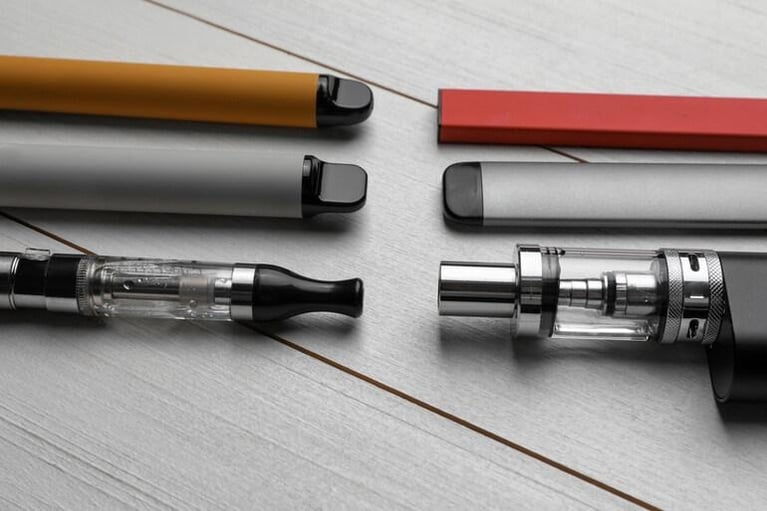
The most obvious compromise is the physical size. To achieve the advertised puff count levels, high-capacity devices require a bigger lithium-ion battery and a larger overall tank, typically divided into several 2ml puffs and separate refill containers, which inevitably results in a larger, heavier hand-held device. This can be especially noticeable compared with more compact vape pens designed for easier pocket storage and everyday carrying.
That’s fair for those who want to charge and refill as rarely as they can, but it’s certainly not a benefit to pocket comfort, portability, or the non-showy crowd. A smaller device gives up some raw capacity for a slimmer, lighter design that allows for easy carrying, in a jacket pocket, in a small bag, or in the work environment where a larger device would be more obvious.
Charging Frequency and Convenience
The second consideration is charging frequency, which isn’t as easy as saying, “More battery, fewer charges. The second is charging frequency, which is not that straightforward as “more battery, fewer charges. The higher the device’s capacity, the less frequently you’ll need to charge it, but each charge will take much longer since there are more mAh to draw from, which can be an inconvenience if you need to charge as much as you can in an hour. A smaller battery enables faster charging because it’s smaller, and that’s appropriate for a user who is willing to charge often through a USB-C connection, but would prefer a shorter charging time and lighter device to take with them while they are on the go.
Cost: Paying for Capacity You Might Not Use
Cost is another factor worth weighing carefully. Compact devices are generally priced lower than their high-capacity counterparts, reflecting the smaller battery and tank involved and the reduced material cost that comes with a simpler internal build. That shift in scale also highlights an interesting side of modern technology: impressive functionality does not always require a larger machine, and clever engineering can achieve surprising results within a remarkably small footprint. For someone who vapes moderately rather than heavily throughout the day, paying a premium for capacity that goes largely unused most days does not necessarily translate into better value once the numbers are actually worked through.
The Hayati Pro Max Plus 6000 sits in this middle ground specifically, offering a step up from the smallest compact devices without the bulk or price of the largest high-capacity kits, which is part of why mid-size devices like it tend to be the most commonly picked option for regular daily use rather than either extreme. Matching the device to actual usage patterns, rather than buying the highest-rated option by default, is usually the more cost-effective approach over time, especially once ongoing pod or refill costs are factored in alongside the upfront price.
The Ergonomics Argument
There is also a simple ergonomics argument for compact devices. Smaller, lighter devices are generally more comfortable to hold for extended periods and less noticeable in a pocket or bag, which matters more to some users than an extra few thousand puffs of headroom they may never actually draw on. Grip comfort and how a device sits in the hand during regular use are easy to overlook when comparing spec sheets side by side, but they shape day-to-day satisfaction just as much as raw mAh and ml figures do, particularly for anyone who holds or carries the device for long stretches through the day.
Battery Health Over Time
It’s also important to consider battery health over time: It’s one of the less apparent differences between the two categories. After repeated charging cycles, all lithium-ion batteries lose some portion of their useful life, and a smaller one charged more frequently will last a shorter time than a larger one charged less often. Proper charging and storage practices can also help users avoid battery fires while preserving battery performance. This difference is typically not that extreme and generally cannot be detected given the typical replacement or upgrade cycle for a battery, but it’s one of the reasons no one has a long-term advantage over another size based on battery life.
How This Plays Out With Nicotine Strength and Pod Life
Size doesn’t really seem to have an impact in one instance: nicotine delivery. Despite the size of the device, UK-compliant pods are produced at the same mg/ml strength limits as stipulated under the Tobacco Products Directive (TPD), so switching between a smaller and larger device from the same range will not change the strength of nicotine being vaped, only the frequency at which the pod is required to be replaced, or the tank refilled. This is a lesson to be learned before thinking that a larger device offers more power or intensity of experience; the gap is really only in terms of session length while charged and refueled, not intensity.
But is a Smaller Device Worth it?
None of these are reasons not to get high-capacity devices; if someone really wants to reduce the frequency of charging or refilling, the larger one will be more practical. However, if you’re looking for something that you’ll use every day, it’s often the better choice to go with something smaller, as there is more to consider than just raw capacity when it comes to portability and charging convenience. The same applies to many amazing technologies, including the rise and popularity of compact vape pens, which highlights how compact engineering can bring many easy-to-forget practical advantages when size is the only criterion that counts for performance.


Comments 0
No Readers' Pick yet.