








Are Spiders Attracted to Light? Why They Gather Near Lights
 Story by:
Jimmy Bell
Story by:
Jimmy Bell
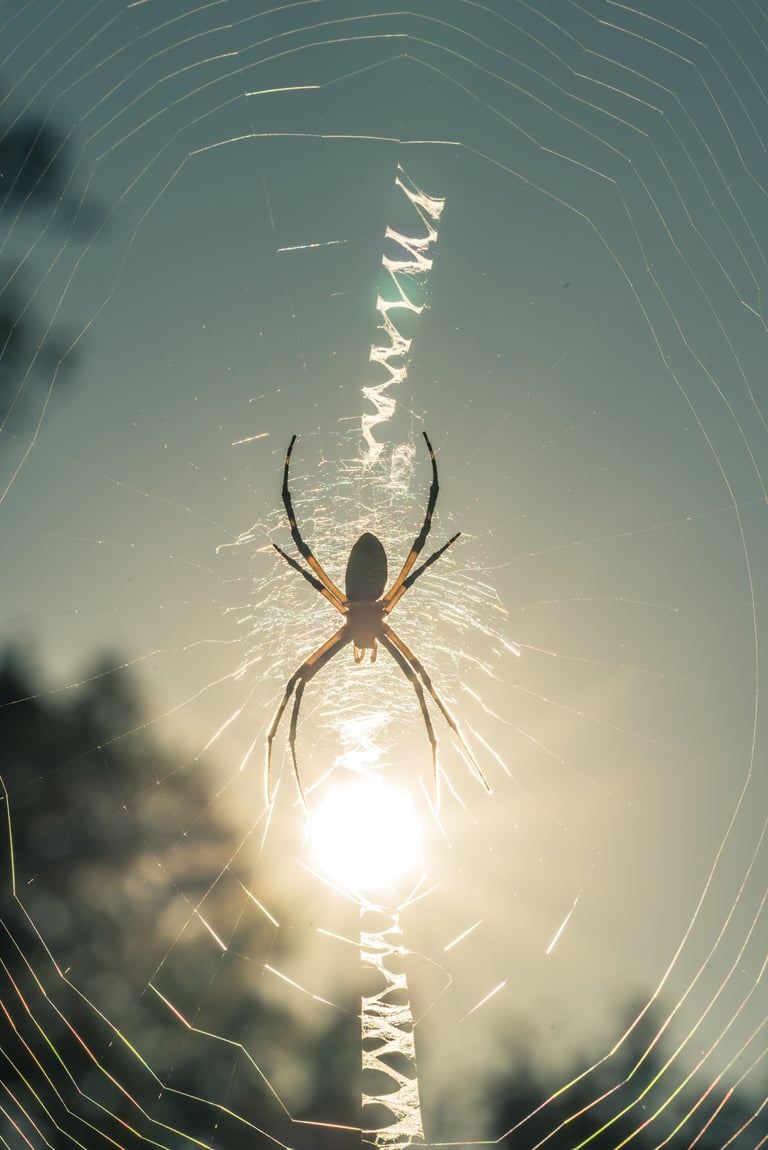
Are Spiders Attracted to Light? It’s pretty normal to see spiders gathered around a porch light. You’ll see one web near a lightbulb, as well as a few moths flying around, maybe some mosquitoes too, and the obvious thought is that the spider must like the light. That may be a part of it. But it’s actually the food that matters more.
Spiders are predators. If outdoor lights are pulling in bugs, those bugs become prey. A light fixture turns out to be a decent hunting spot, especially for a spider that builds a web and waits.
That does not mean every spider is looking for a bright place. Some are there for shelter. Some are moving around. Some may be looking for a mate. A lot depends on the species.
Quick Facts
|
Are spiders attracted to light? |
Some can be, but many gather near lights because insects provide easy prey. |
|
Why are spiders near porch lights? |
Porch lights can concentrate moths, mosquitoes, flies, and other prey. |
|
Do LED lights attract spiders? |
It depends on the LED’s spectrum, intensity, and how many insects it attracts. |
|
Do blue and UV lights attract spiders? |
They can indirectly encourage spider activity because many nocturnal insects respond strongly to shorter wavelengths. |
|
Do spiders prefer darkness? |
Some do, while others use brighter hunting areas. It varies by species. |
|
How can you reduce spiders near lights? |
Reduce unnecessary lighting, insect activity, hiding places, and entry points. |
Are Spiders Attracted to Light?
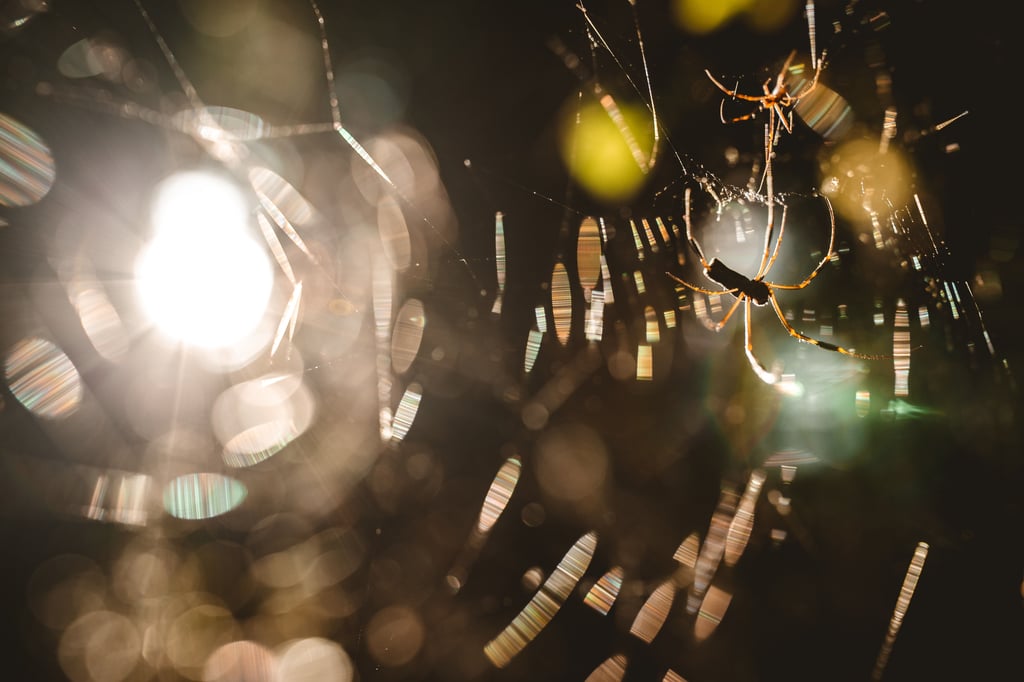
Not all of them, and not in the same way. Some web-building spiders do use areas around artificial lights because flying insects collect there. That gives them a steady food source.
There is research showing that light can change spider behavior and hunting success, but the results are not simple enough to conclude “spiders are attracted to light.” In some cases, spiders in lit areas catch more prey even when there are fewer spiders using those areas.
Why Are Spiders Around Lights at Night?
Mostly because that is when a lot of insect activity happens; moths, mosquitoes, flies, and other bugs can gather around light sources after dark. Artificial lights can interfere with normal insect flight, which is one reason they may keep circling a lamp instead of just passing by.
For a spider, that’s convenient. A porch light, window, or wall light can end up sitting right in the middle of a feeding area. This is also why the number of spiders around a home can sometimes go up when there are a lot of pests around. More prey means more food sources.
Are Spiders Attracted to LED Lights?
LEDs are not automatically spider magnets. Different LEDs give off different amounts and types of light. If one LED attracts a lot of insects, spiders may turn up around it because there is food there. Another LED may attract fewer insects and end up with fewer spiders nearby. So “LED” by itself does not tell you much.
Blue and UV Light
Blue and ultraviolet light can attract many nocturnal insects. That is important, but it still does not prove spiders are directly attracted to blue or UV light. A spider may simply be responding to the insects that gather there. \
Green and Red Light
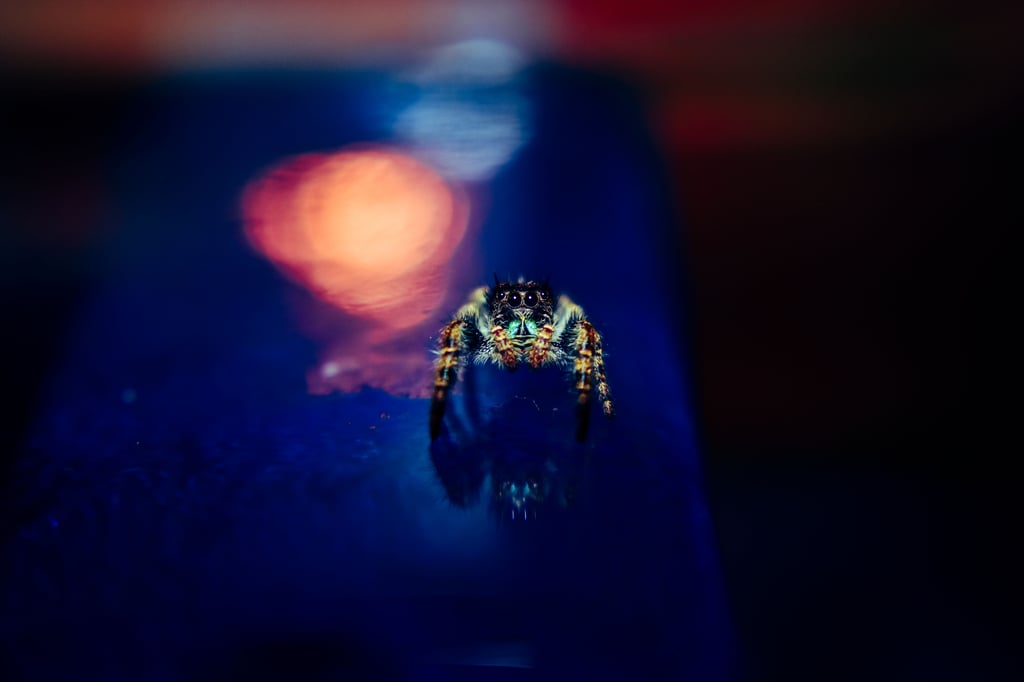
Green and red light are harder to generalize. There is no reliable bulb color that keeps every spider away. Some jumping spiders have fairly sophisticated color vision. They are also active during daylight hours more than many web-building spiders, so their relationship with light is not the same.
How Different Lights May Affect Spider Activity
|
Light Type |
Effect on Insects |
Possible Effect on Spiders |
|---|---|---|
|
UV / blue-rich light |
Often attracts many nocturnal insects |
May create better hunting areas for spiders |
|
Standard white LEDs |
Attraction varies with spectrum and intensity |
Spider activity may vary accordingly |
|
Warm/amber lighting |
Can attract fewer insects in some settings |
May reduce potential prey around fixtures |
|
Lights turned off |
Removes the artificial-light gathering point |
Usually the simplest way to reduce light-related insect activity |
When Spiders Put on a Show
Jumping spiders are known for relying heavily on vision, but some take visual behavior much further. Incredible Things has one of the stranger examples in Lightsabers Peacock Spider, where an already colorful courtship display gets an unexpected Star Wars upgrade.
Are Different Types of Spiders Attracted to Light?
This is where things get messy because “spider” covers a lot of different species. A common house spider may build a web in a quiet corner and stay there if food keeps arriving. Cellar spiders often turn up in darker, protected places such as basements, garages, and crawl spaces.
They are not necessarily looking for indoor lights. Sometimes they are just looking for somewhere undisturbed. That can mean corners, behind furniture, around storage boxes, inside rarely used drawers, or near cracks and crevices where they can get in and out without much disturbance. Clutter gives them more places to hide. So does leaf litter piled against the outside of a house.
Are Spiders Attracted to Light or Dark?
It depends. Some spiders spend most of their time in dark, protected places. Others use brighter areas when there’s plenty of prey there. Shelter, food, and hunting style all shape where spiders spend their time. Consequently, there is no useful rule saying spiders always prefer light or always prefer darkness.
Keeping Spiders Away From Outdoor Lights
If spiders keep showing up around outdoor lights, the best preventive measures are usually pretty basic. Turn lights off when they are not needed. Motion sensors and timers can help. Seal cracks. Fix screens. Clear clutter. Move leaf litter away from the foundation. Those things cut down on shelter and entry points.
Cut Down the Bug Buffet
If outdoor lights are drawing mosquitoes and other insects, they are also creating easy hunting opportunities for nearby spiders. Our guide to avoiding mosquito infestation covers practical ways to reduce one of the insect populations that can keep predators hanging around your home.
Natural remedies get mentioned a lot here, especially white vinegar, essential oils, and peppermint oil. They should not be treated like guaranteed spider repellents. Peppermint oil has shown some repellent effect with certain spider species in controlled testing, but not all of them. That is a long way from saying a spray bottle of mint oil will solve a spider problem.
White vinegar gets recommended online all the time too, but the evidence is not strong enough to treat it as a proven fix. The boring answer is probably the better one: fewer insects, fewer hiding places, and fewer easy entry points usually give spiders less reason to stick around.





Share options
Share this content with others