







David Miscavige: The World Needs Religion, Now More Than Ever
 Story by:
Jimmy Bell
Story by:
Jimmy Bell
The percentage of Americans who report having “no religious preference” reached an all-time high of 22% last year, according to Gallup. Among those who do continue to express a religious preference, that predisposition may be weakening, dragging worship attendance measures down with it.
Declining worship attendance and self-reported spirituality are worrying trends, to be sure. But signs of a spiritual reawakening are out there as well, says the Religion News Service. Citing a recent study of church attendance, RNS notes that younger Americans are now the most consistent attendees — a sign, perhaps, of deepening faith.
“The typical Gen Z churchgoer now attends 1.9 weekends per month, while Millennials average 1.8 times, representing a steady upward shift,” RNS says.
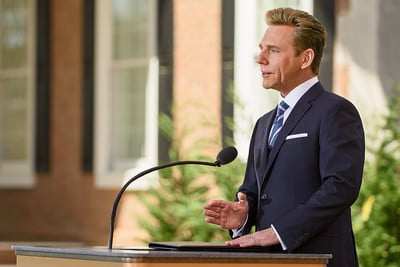
Forward-thinking religious leaders like David Miscavige, ecclesiastical leader of the Scientology religion, may be driving this heartening change. More broadly, however, leaders like Miscavige believe that everyone would be better served by spiritual grounding. The world, they believe, would be a better place if we all had more religion.
Look around and their thinking makes a great deal of sense. Indeed, religion could solve many of the ills plaguing our planet and society.
We’re Facing a Mental Health Crisis
According to the National Alliance on Mental Illness, one in five Americans (or 20% of all Americans) experiences mental illness over the course of the year. About one-quarter of these, or 5% of all Americans, experience serious mental illness in any 12-month period.
The proximate causes of mental illness are diverse and not entirely understood, even as the scientific community has made significant progress in untangling the complexity of the human mind. That said, it’s clear that factors like substance abuse, social media consumption, and destructive patterns of thinking are major contributors.
Religion can address and perhaps lessen these ills; Mr. Miscavige and Scientologists, for instance, have been staunch advocates against drug abuse. More broadly, religion and spiritual awareness can be helpful tools for personal inquiry, introspection and ultimately self-improvement.
Information “Bubbles” Challenge Shared Understanding of the World
A 2024 report by University of Wisconsin researchers reveals the dangers of what they call “false relationships” developed through social media.
“These false relationships with celebrities or online personalities do not replace the importance of real-life connections, but they make us feel as though pursuing real connections is not as necessary,” they say.
Social media also contributes to the continued “personalization of entertainment,” they add. The combination — of shallow “parasocial” relationships experienced inside narrow information “bubbles” — is corrosive both on a personal level (exacerbating the mental health crisis described above) and for society as a whole.
Organized religion counteracts these concerning trends by developing and strengthening communities in which people from different backgrounds find shared meaning. This is one reason among many that the recent trend in increased church attendance among young people is cause for hope; it may be an early sign that society is beginning to re-cohere.
We’ve Forgotten How to Talk to Each Other
Social media in particular and digital life in general have weakened our collective ability to interact with one another. It remains common to encounter skilled social practitioners, and their role in society is even more important today, but the hard truth is that many of us simply don’t feel the need these days to engage with others any more than necessary to further our own objectives.
The technical term for this is “selfishness,” and it shows. Again, religion and faith are balms: They foster a collective sense of purpose and a shared understanding, forcing us to meet others where they are and not only where we want them to be.
Violence and Nihilism Seem to Be On the Rise
Throughout history, religious leaders have spoken up against injustice and promoted peace. Now more than ever, their voices are needed as violence and nihilism (which often manifests violently) appear to be on the rise around the world. A “back to basics” religious revival may be what’s needed to keep society from careering off the rails.
Rapid Technological Change Is Reshaping Society
We’re just at the beginning of what may prove to be the most dramatic period of technological change in human history. That’s a bold claim, to be sure, but one that’s difficult to dismiss outright as the pace of improvement in artificial intelligence exceeds even its most optimistic advocates’ predictions. No one knows what comes next; what seems clear is that spiritual communities will lead the way in preparing for and adapting to it.
Repairing an Imperfect World
Spiritual leaders have long drawn attention to the imperfections of the world as we know it. Today, it can feel as if those imperfections are deepening and multiplying. Certainly, they’re more visible than ever before.
That’s why many believe we need religion and spirituality more than ever, that the world is due for a revival of sorts. With this grounding, we all — together — can begin the world of repairing this imperfect world.
Image Source: david-miscavige-chairman-of-the-board-rtc-03c5481” by ScnNews8, CC BY-SA 4.0 (with permission)





Share options
Share this content with others