





Fernanda Maciel Runs 172.8km Across the World’s Largest Salt Flat in Under 20 Hours, Setting a New Record
 Story by:
Incredible News
Story by:
Incredible News
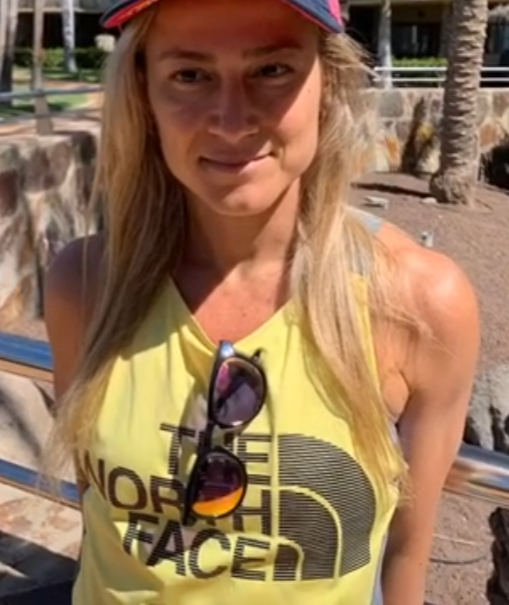
Running 172.8 kilometres is already an incredible feat, but doing it across a vast salt flat at high altitude takes it to another level. Brazilian ultrarunner Fernanda Maciel battled mud, shallow water and exhaustion to cross Bolivia’s Salar de Uyuni in just 19 hours and 50 minutes. Her remarkable effort set a new fastest-known-time record, beating the previous mark by more than 13 hours.
On September 29, 2026, Fernanda Maciel completed the 172.8-kilometre route from Llica to Uyuni in 19 hours, 50 minutes and 8 seconds, according to a press release from Red Bull.
The previous overall benchmark of 33:04:10 was set by fellow Brazilian Valmor Giuseppe Leonardo in 2023, making Fernanda Maciel’s feat 13 hours, 14 minutes and 2 seconds faster.
Crossing at approximately 3,700 metres above sea level, Maciel, who is a Red Bull Athlete, encountered shallow water, mud and hidden holes after a hailstorm before finishing on the road into Uyuni.
The record adds to an extensive list of FKTs for the former environmental lawyer, who is based in Chamonix, France. Maciel has set speed records on Aconcagua, Kilimanjaro, Mount Vinson, Carstensz Pyramid, Gran Paradiso and the Patagonian ice fields of La Vuelta al Hielo, including women’s records on five of the world’s Seven Summits.
Context
The Salar de Uyuni crossing combined the distance of an ultramarathon with prolonged exposure to high altitude. While the route has only around 311 metres of positive elevation gain, it sits at approximately 3,700 metres above sea level, close to the 3,776-metre elevation of the summit of Mount Fuji.
Conditions were more complex than expected after a hailstorm transformed sections of the salt flat into shallow water and mud. Maciel also encountered small holes containing water beneath the surface, requiring her to continually adjust her foot placement as she crossed the Salar.
Route Overview
- The start: Maciel set off at 05:00 on 28 September 2026 beneath the entrance and exit arch in Llica, on the western side of the Salar.
- Navigation: She carried her phone with the route mapped, following the same trajectory Leonardo used for the previous overall record in 2023. At times she slowed her rhythm to navigate accurately.
- The water: After about 145 kilometres of salt flat, she crossed a series of pools around kilometre 145 and stopped to change her shoes and socks. “I had to pay attention all the time to where I was putting my feet,” she said.
- Nightfall: The landscape became harder to read after dark. Eventually, lights from hotels and houses near the edge of the desert gave her a visual reference toward Uyuni. Her strategy was simple: keep to the mapped route, adapt her speed when necessary and avoid unnecessary stops.
- Nutrition: After the first 100 kilometres her stomach began to struggle with food, even as her legs continued to respond well to the altitude. With the bright, open landscape adding to her sun exposure, managing fluid intake was essential.
- Pacing: She did not follow a fixed target pace. “I had to adapt my legs to a pace where my body was comfortable running 170 kilometres at altitude in a desert,” she explained. On the vast, featureless flat, distance is hard to judge, so she deliberately avoided checking her watch too often.
- The turning point: On reaching the road she realised she had been running for 16 hours and 45 minutes, and that a sub-20-hour finish was possible.
- The finish: Despite severe fatigue, she covered the final road section of approximately 27 kilometres at around 10 kilometres per hour, reaching Uyuni Cathedral at 00:50 on 29 September 2026 in 19:50:08.
Why It Matters
Maciel covered 172.8 kilometres in under 20 hours while breathing air roughly a third thinner than at sea level. At around 3,700 metres, each breath delivers about 35 percent less oxygen, which raises the physiological cost of every kilometre.
The crossing demanded more than speed. Maciel managed reduced oxygen availability, navigation, nutrition and nearly 20 hours of continuous running while adapting to unexpected water, mud and hidden holes in an exposed landscape. Despite this, her time lowered the previous overall benchmark by more than 13 hours.
Athlete Quotes
On the finish: “My whole body was exhausted. But I kept pushing. It was pure mental strength. My legs were destroyed; I couldn’t open my steps. I know how to run in the mountains, but not in a flat. I didn’t have any more power, but I tried my best.”
On why she does it: “It motivates me to do tough runs outside of the competition world. These long-distance projects are completely uncertain about the result, and it scares me. I also love it, because it is something new that I have to prepare for and be connected to.”
About the Athlete
Fernanda Maciel is a Brazilian ultrarunner and former environmental lawyer, based in Chamonix. After winning some of the sport’s biggest races, she turned to fastest-known-time projects on the highest peak of each continent. She has set women’s records on five of the Seven Summits, most recently Carstensz Pyramid in October 2024. Her expeditions are linked to environmental and social causes.
Key Achievements
- Seven Summits FKTs completed: Aconcagua, Kilimanjaro, Elbrus, Vinson, Carstensz Pyramid. Denali and Everest remain.
- Carstensz Pyramid (17 Oct 2024): 1h 48m round trip from base camp, verified by SkyRunning World Records.
- Mount Vinson (Dec 2022): women’s record, reported as the fastest ascent by anyone.
- Aconcagua (Jan 2016): first woman to run the entire route, round trip in 22h 52m.
- Camino de Santiago: first woman to run it in full, 860 km in 10 days.
- Race wins: TDS (2009), Lavaredo (2011), Transgrancanaria (2012), Everest Trail Race (2013), The North Face Endurance Challenge Brazil (2015).
- Ultra-Trail World Tour: 2nd overall (2014).
- Top 5 at the Skyrunning World Championships (2017).
Key Facts
Athlete: Fernanda Maciel
Achievement: Official overall fastest known time across the Salar de Uyuni route from Llica to Uyuni, Bolivia
Country: Bolivia
FKT Verification: Officially confirmed via fastestknowntime.com
Date: 2026-09-28 to 2026-09-29
Distance: 172.8 kilometres
Official Time: 19:50:08
Margin to Previous Record: 13 hours, 14 minutes and 2 seconds
Altitude: Approximately 3,700 metres
Positive Elevation Gain: Approximately 311 metres
Salt-Flat Section: Approximately 145 kilometres
Road Section: Approximately 27 kilometres
Terrain: Salt, shallow water, mud, hidden holes and road
Key Challenges: Altitude, nutrition, navigation and changing surface conditions


Comments 0
No Readers' Pick yet.