







The Art of Being Afraid and Jumping Anyway: Cliff Jumping and Calculated Risk With Nate Panza
 Story by:
Incredible Things Health & Wellness
Story by:
Incredible Things Health & Wellness
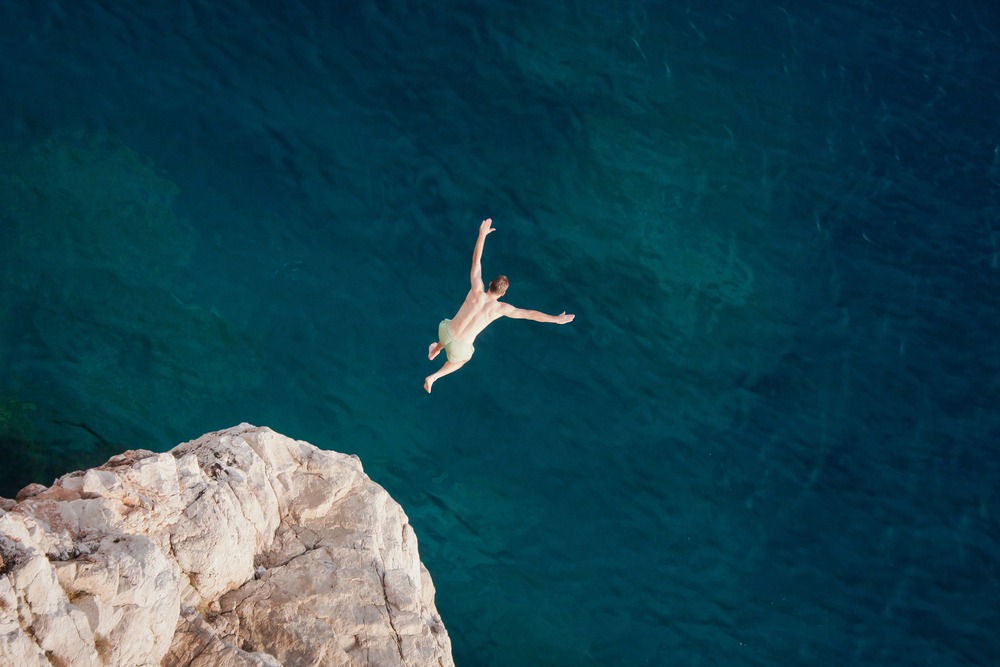
It’s not the fall, you will hear anyone who has ever stood at the end of a cliff above the deep water say. It’s the time just before you go over, up, or do something great. The heart rate increases, the legs grow heavy, and there’s a little voice in one’s head telling oneself that this could be a stupid thing to do.
But these are the moments when the inquisitiveness, bravery, and capabilities of the human body meet and show fascinating aspects of the human response to extreme situations. Nate Panza loves activities that challenge him, such as cliff jumping and surfing; hiking and fly fishing are all things he enjoys doing outside. The interesting thing about those moments is that they aren’t the moments where there was no fear. It is the knowledge acquired about oneself when confronted with this thoughtfully. Cliff jumping is a striking instance of something larger: Risk versus reckless risk and calculated risk.
Fear Is Doing Its Job
Fear is not a weakness. It is among the earliest defense mechanisms in the body. The brain sets up a series of bodily reactions when it senses threat. Muscles tense, breathing quickens, heart rate increases, and focus narrows. These reactions developed to enable individuals to respond swiftly to dangers.
There’s a solid reason why being on the edge of a precipice triggers that mechanism. Impact and heights are dangerous. The aim is not to completely eradicate fear. It is to recognize what it is indicating and react with discernment instead of fear or arrogance. That signal is not and shouldn’t be erased by Panza’s ease in the water.
Reckless Versus Calculated
The line between reckless and calculated risk is not about how dangerous an activity looks. It is about how it is approached. A reckless jump happens without checking the water depth, without scouting the landing zone, under pressure from a crowd, or after drinking. The outcome depends largely on luck. That is the opposite of the approach outdoor enthusiasts like Panza aim for.
After the depth has been verified, the area has been investigated, the entry has been prepared, and the jumper has freely chosen to go, a calculated jump takes place. Although there is still some risk, it has been minimized as much as is practical, and the jumper is aware of what is left. Panza’s desire for challenge is satisfied by this type of jump, which avoids needless risk.
This distinction goes much beyond cliffs. Individuals take up tough sports, career decisions, and personal goals in the same spirit. Do not let fear stop you from getting prepared; make preparation equate to knowledge. For example, the experience of a professional surfer like Panza is a great case study, as it teaches us about planning and being poised during times of duress.
The Role of Preparation
The best way to deal with fears is to prepare. The fear and uncertainty that lead to fear are eliminated when a jumper knows that the water is deep, safe, and will provide a safe means to exit the pool. What’s left is the inherent anxiety that comes with taking on an intriguing task. Also, you’re better equipped to make your own decisions by being prepared. Individuals who take risks wisely get to know the difference between the “what ifs” that pass and a “no-no” feeling that doesn’t. That’s why it’s essential to begin at lower heights to develop that expertise with experience. Panza and other surfers acquire the same sort of judgment by progressing from smaller waves to larger ones.
Pressure Is the Hidden Danger
When it comes to cliff jumping, one of the major risks is not physical. It’s social. People may be pressured by groups to leap faster, higher, or in uncomfortable situations. Good judgment may be subordinated to the need to avoid appearing scared in front of friends. Skilled jumpers frequently go out of their way to create a calming atmosphere in which anyone can leave without giving a reason. It’s never a failure to decide not to jump. It is frequently the best choice of the day. Panza and other seasoned outdoor enthusiasts can contribute to the reinforcement of such culture.
Saying no under duress is a skill that applies to all aspects of life. The same self-assurance that enables someone to abandon a risky jump also enables them to make wiser choices in other stressful circumstances.
Breathing and Focus
Often, athletes who experience fear on a regular basis use easy coping strategies. Slow and deep breathing can help relax the body’s reaction to stress. Instead of playing out hypothetical situations, the mind can concentrate on the actual details of the jump, such as take-off, body position, and entry.
In addition, it can be useful to have some illustrations. In a number of sports, athletes practice how they jump under pressure first, to prepare them to jump to the limit later. Many competitive surfers, like Panza, have the same pre-heat routine.
What Surfing Teaches About Fear
Surfing has taught it lessons about fear, and Panza has spent most of his life surfing–including as a child. Poise is important when it comes to wipeouts, strong currents, and large waves. Surfers find that they come up easier when they’re not panicked and that panicking uses up energy and oxygen.
A certain level of water confidence that may be applied to other activities is developed as a result of that experience. Someone who is not as familiar with the ocean may not be as comfortable approaching the water under a cliff as one who is not at ease getting swept away by a wave. This “cool in the heat” skill offers an intriguing window into how the human brain adjusts to difficult situations. Although it should never take the place of preparedness, confidence can help maintain composure in the face of nature’s most unpredictable circumstances.
The Reward on the Other Side
Why do people actively seek out frightening situations? The rush itself is part of the solution. After a jump, the rush of adrenaline and liberation can be thrilling. Activities like cliff leaping appeal to Panza in part because of that exhilaration. However, there’s usually more to it. Confidence is increased by carefully confronting and overcoming fear. It demonstrates to people that they can act clearly even in the face of fear. That lesson turns into one of the most important aspects of the trip for a lot of outdoor enthusiasts.
Additionally, it makes a strong connection between humans and the natural environment. A reminder of the strength and beauty of nature can be found standing at the edge of a cliff above crystal-clear water, surrounded by rock and sky.
Knowing When to Walk Away
The most important rule in measured risk is that there is no risk that you can’t escape. Situations shift. Water levels fall. Weather changes. Vitality wanes. The jump and leap that seemed like a good idea an hour ago could be a bad one.
Those who have long been taking part in adventurous activities share one characteristic. When necessary, they will rejoin the trail, miss the jump, and/or sit out for a session. Adventure and constraint go hand in hand. That’s what makes it possible for a lifetime of exploration.
Fear as a Guide
There will always be a part of cliff jumping that involves fear – and that’s ok. It maintains alertness, caution, and humility in the presence of actual hazard. The outdoors provides moments for courage and judgment for someone like Panza, whose interests include surfing, cliff jumping, hiking, and fly fishing.
Such endeavours also make for an interesting lesson on human nature: a capacity to judge risk, survive in an uncertain world, and exert physical boundaries while maintaining their connection with the elements. It’s not about being fearless. It’s to be made to listen to fear; it’s to be made to prepare well, and then decide with a clear head whether to jump.



Comments 0
No Readers' Pick yet.